From Vision to Action: Why Green Transformation Requires a Holistic Approach
April 20, 2026

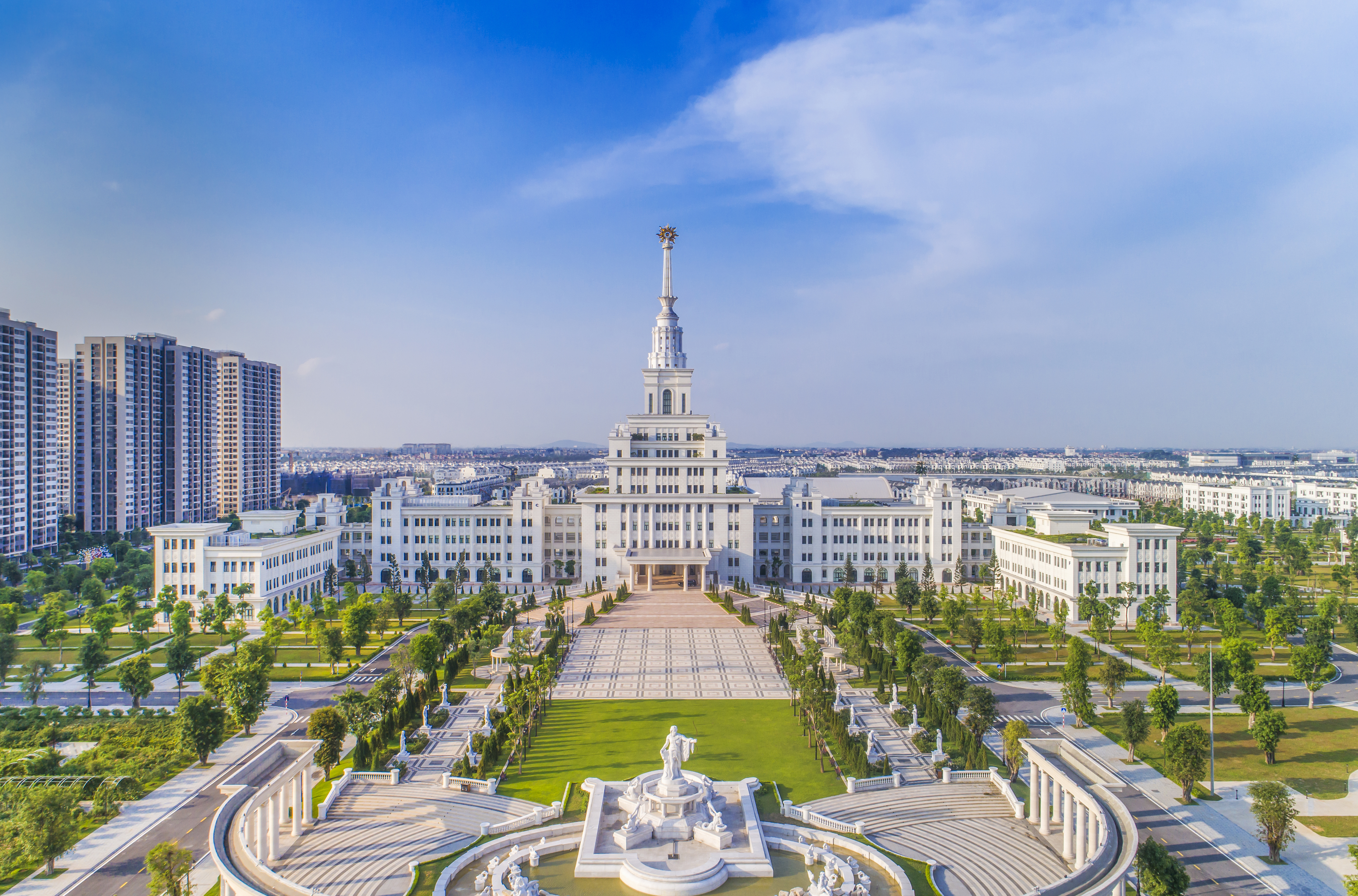
In the context of Vietnam’s commitment to achieving net-zero emissions by 2050, the project “Collaborating for a Sustainable Future: The Nha Trang – Khanh Hoa Green Transformation Initiative” was launched as a collaborative effort between VinUni Smart Green Transformation Center (GREEN-X), and local government authorities.
For Khánh Hòa, a rapidly developing coastal province with key economic sectors such as tourism, industry, aquaculture, and infrastructure, this challenge is particularly complex. Each sector operates under different objectives, dynamics, and environmental impacts. Implementing fragmented, sector-specific solutions would therefore yield limited overall effectiveness.
To address this, the project aims to develop a comprehensive provincial green transformation roadmap, bridging research, policy, and practical implementation. In this process, GREEN-X serve as core research and policy advisory units, leading the development of a science-based green transformation framework with active multi-stakeholder engagement.
In practice, a major challenge is that “green” initiatives often remain fragmented across sectors such as tourism, waste management, or transportation. While necessary, these efforts rarely generate systemic impact without integration.
In Khánh Hòa, the GREEN-X research team identified that green transformation must be approached as a system, rather than a collection of isolated solutions. This led to the development of a provincial-level green transformation framework with the following objectives: Integrating economic sectors under a shared development vision, aligning policy, investment, and implementation, balancing economic growth with environmental protection, and leveraging synergies across sector.
The framework covers six key sectors: tourism, industry, agriculture, transportation, infrastructure, and sustainable lifestyles, supported by foundational elements such as green finance, ESG governance, and policy innovation. Rather than being a static plan, the system functions as a strategic core, guiding the entire transformation process.
Developing such a comprehensive framework is not only a technical task but also involves reconciling diverse interests and perspectives, including businesses prioritize efficiency and cost, government agencies focus on feasibility and implementation, as well as communities are directly affected by environmental outcomes.
To address this, GREEN-X adopted a co-creation approach, engaging a team of over 50 interdisciplinary experts working alongside local authorities, businesses, and communities.
In this phase, GREEN-X played a dual role, not only as research institutions but also as knowledge integrators, bringing together diverse perspectives into a unified framework. The result is a transformation roadmap that is scientifically grounded, contextually relevant, and practically implementable.
Beyond developing the framework, GREEN-X has also focused on strengthening the capacity of local leaders and officials, enabling them to apply ESG tools and interdisciplinary thinking in governance and implementation.
The alignment between system design and implementation capacity has facilitated the gradual translation of strategic directions into concrete actions across sectors such as tourism, transportation, and aquaculture.
At the same time, this approach demonstrates strong potential for replication, as other localities have begun to explore and adopt similar models.
This project highlights a fundamentally different way of understanding green transformation.
It is not simply a collection of isolated projects or a reform confined to a single sector; rather, it represents a comprehensive, systemic transformation process. This transformation requires interdisciplinary thinking, coordinated action among multiple stakeholders, and a strong overarching framework to effectively guide implementation.
As a research and policy advisory institution, GREEN-X not only contribute to the development of the project but also help shape how green transformation is approached at the local level: opening new pathways for sustainable development in Vietnam.