Solutions for Transportation Electrification to Address Air Pollution and Implement Nationally Determined Contributions (NDC) in Vietnam
September 6, 2025


On September 5, 2025, VinUniversity, in partnership with the Department of Climate Change under the Ministry of Natural Resources and Environment, hosted a scientific workshop: ” Solutions for Transportation Electrification to Address Air Pollution and Implement Nationally Determined Contributions (NDC) in Vietnam,”. The event brings together leaders, experts, and scientists from various research institutes and government agencies.
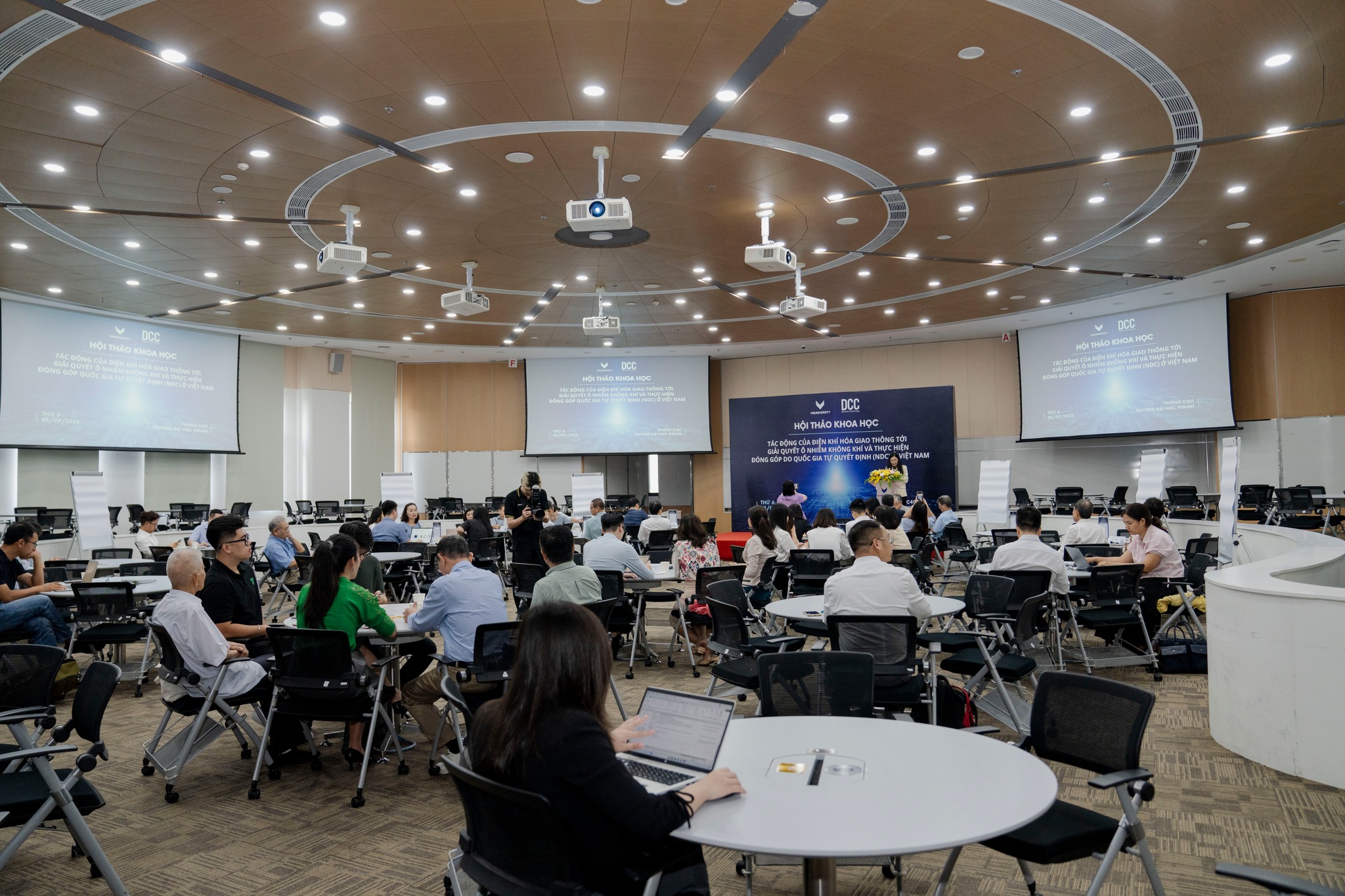
Opening the workshop, Assoc. Prof. Dr. Phan Thi Thuc Anh, Director of the GreenX Innovation Center, explained that the transport sector is one of the biggest contributors to total emissions from the energy sector. Therefore, promoting the use of electric cars is a strategic direction towards improving the air environment and limiting greenhouse gas emissions. She emphasized the need for tight coordination among policy, infrastructure, and technology to have an efficient and sustainable transition.
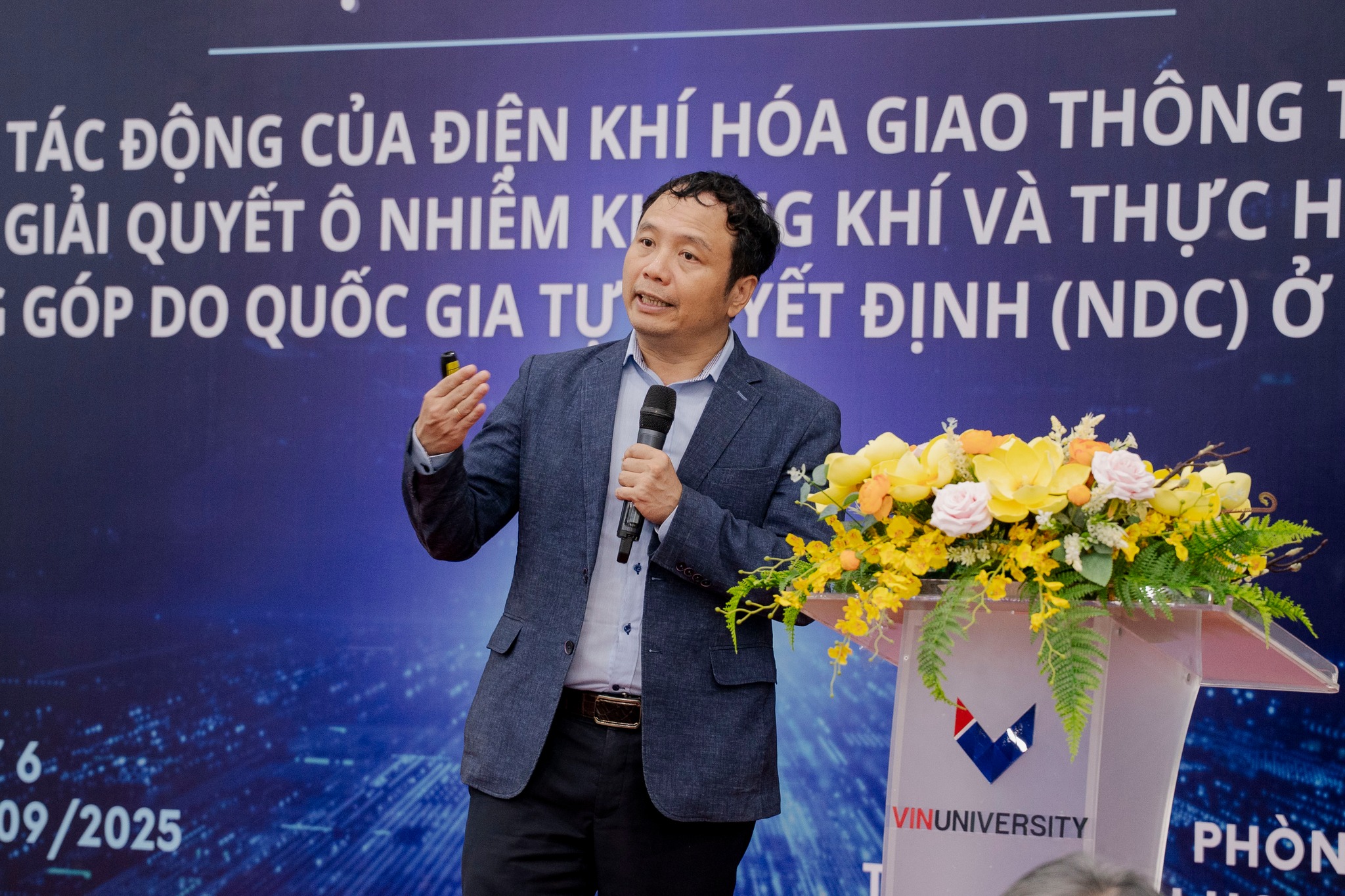
Dr. Nguyen Tu Anh (GREEN-X) presented at the workshop
Throughout the workshop, scientists and experts debated core issues such as the effect of electrification on emission reduction and air quality, carbon market mechanisms, emission pricing, and mobilizing climate finance. An economic study by a research team from VinUni estimated the huge cost of green transition, with Vietnam requiring as much as $2.4 trillion (at 2023 prices) to reach its Net Zero goal by 2050, as estimated by BloombergNEF. However, they determined that this trend is irreversible and requires coordinated effort in policy, technology, and infrastructure areas.
The workshop also considers international experiences for designing credit mechanisms and standards to promote low-carbon fuels, citing models such as the Low Carbon Fuel Standard (LCFS) in California and Japan’s J-Credits system. According to the experts, such examples provide valuable references for developing a transparent legal framework that can stimulate investment in charging facilities, electric vehicle manufacturing, and supply chain businesses.
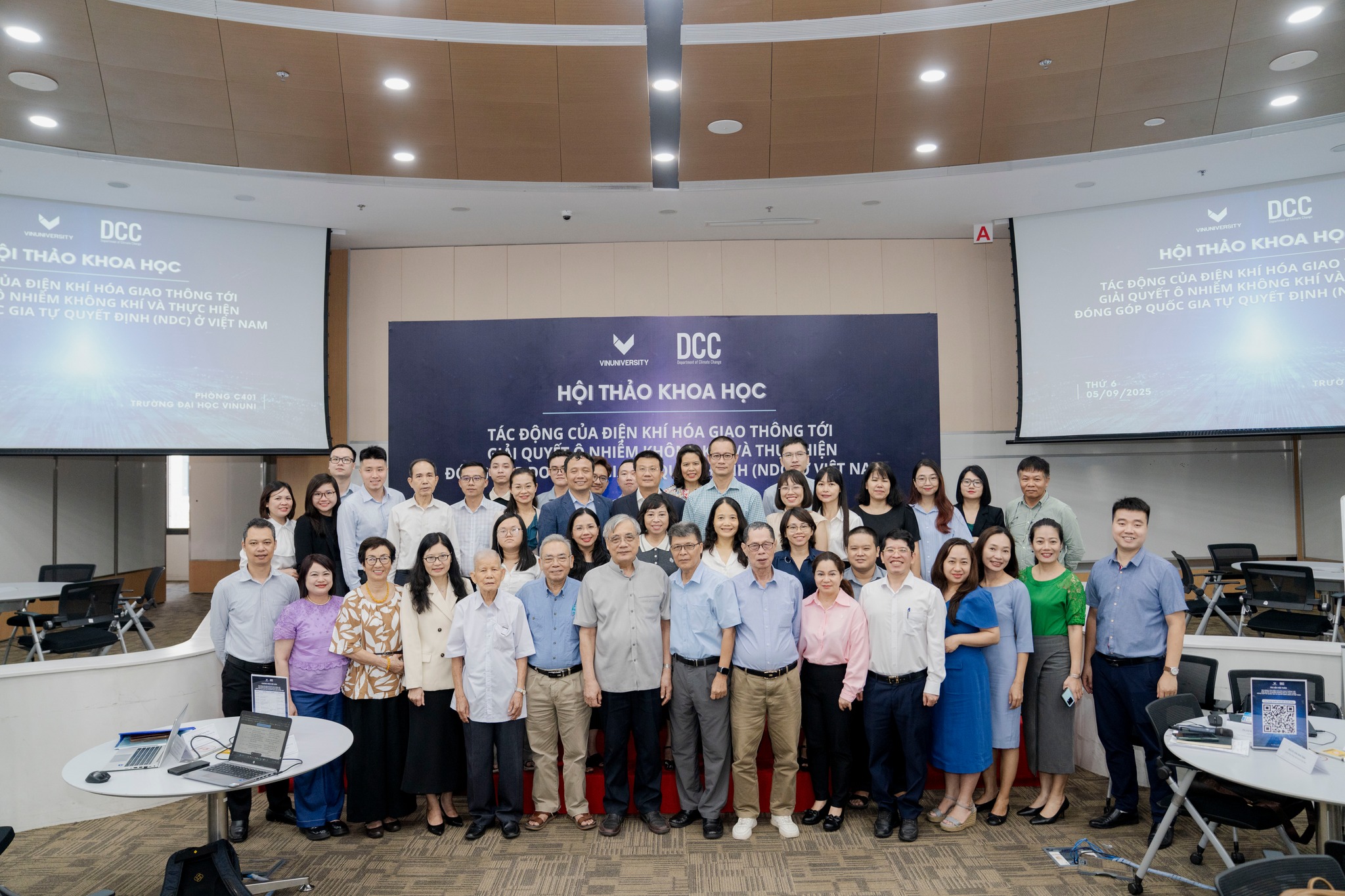
The workshop concluded with a consensus among the delegates that transportation electrification is a key pillar in the strategy for reducing emissions and improving air quality. However, they agreed that its implementation requires a feasible roadmap, clear credit mechanisms, and policies that encourage appropriate investment.